
Laboratory materials
What Does “Lyophilized” Mean? The Science of Freeze-Drying
Lyophilized means freeze-dried. The process freezes a material and removes water under reduced pressure. During primary drying, ice changes directly into vapor—a process called sublimation. The term describes processing, not a complete specification for a laboratory sample.
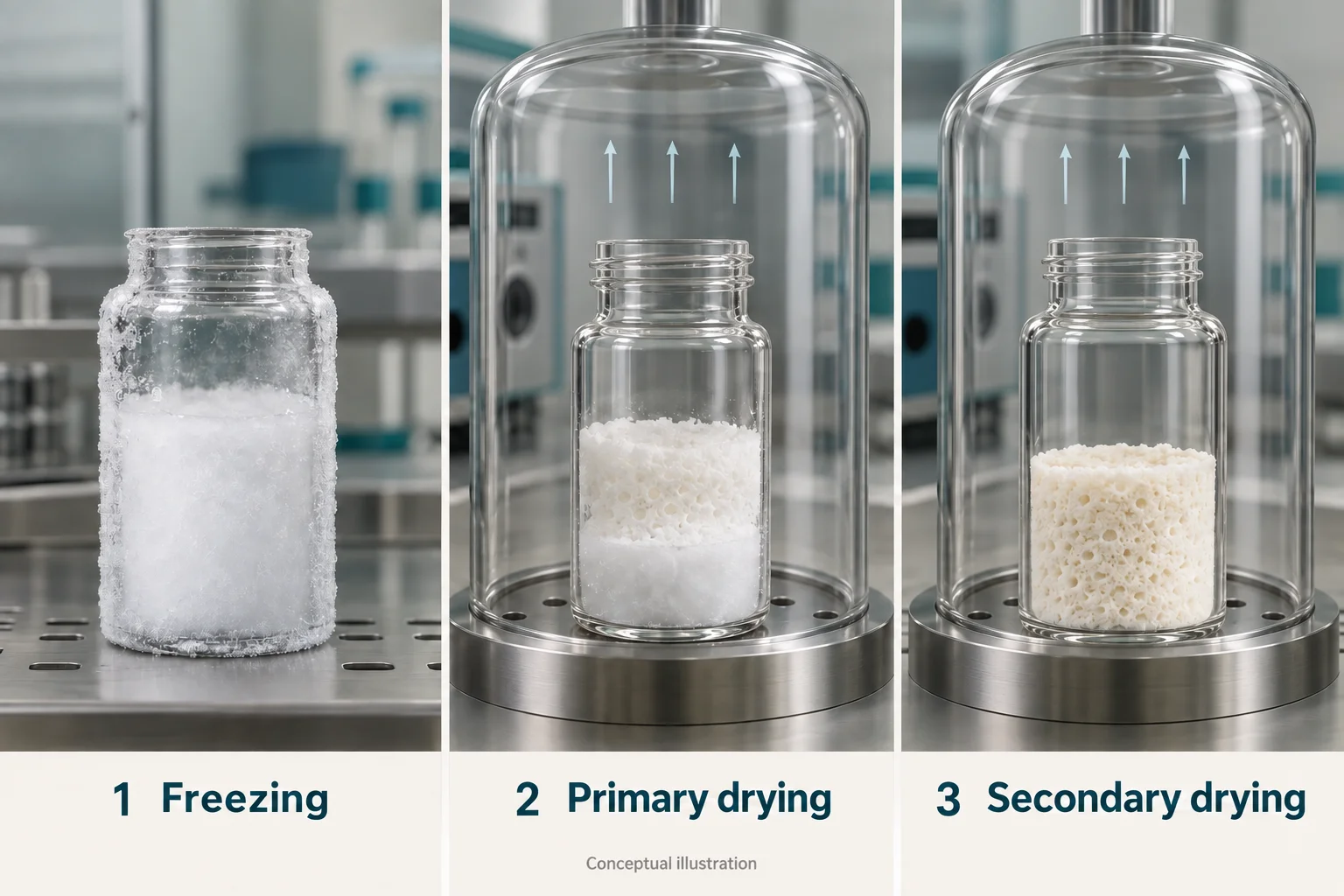
What changes during freeze-drying?
Lyophilization removes water from a frozen material under reduced pressure. During primary drying, ice changes directly into vapor rather than first melting into liquid water. This phase change is sublimation. Secondary drying addresses water that remains associated with the dried material after the ice has been removed.
The visible dry solid is often called a cake. Its appearance describes physical form; it does not by itself establish chemical identity, composition, or a measured moisture level.
Stage 1: freezing establishes the starting structure
Freezing creates ice within the sample. The frozen structure influences the pathways through which vapor later leaves the material. Freezing behavior depends on the sample’s composition; a mixture does not necessarily behave like pure water.
The key distinction is that the material begins primary drying in a frozen state. Simply placing an unfrozen liquid under vacuum is not the same process as freeze-drying.
Stage 2: primary drying removes ice
Reduced pressure and controlled energy input allow ice to sublime. A cold collector captures the water vapor. The sample needs energy for this phase change, but excessive warming can damage its physical structure. Primary drying therefore involves a balance between supplying heat and keeping the material within its appropriate processing limits.
The arrows in the illustration indicate vapor movement conceptually. They are not visible steam, a measured flow rate, or equipment instructions. The open sample containers show that vapor needs a path out of the material.
Stage 3: secondary drying removes retained water
After the ice is gone, some moisture remains associated with the material. Secondary drying reduces this retained moisture through desorption. It is a different mechanism from sublimation of ice, which explains why a sample can look dry before the process is complete.
An end point should be determined by suitable process evidence, not appearance alone. Labconco notes that ending a run too early can leave ice that subsequently melts and rehydrates the dried cake.
Why a cake may look different from a powder
Freeze-dried material can retain a porous structure where ice was removed. Depending on formulation and processing history, the finished material may appear as an intact cake, fragments, or loose material. Avoid treating shape or fill height as a measurement of peptide quantity.
A photograph can document appearance, but it cannot substitute for analytical evidence. If a sample differs from its supplied description, record the observation and ask the supplier or laboratory whether it is expected for that specific material.
Dry does not mean indefinitely stable or sterile
Removing water can improve stability for some materials, but the word lyophilized does not guarantee a particular shelf life. Residual moisture, formulation, packaging, and storage conditions matter. Freeze-drying is also not, by itself, proof of sterility.
Do not infer a storage temperature, expiry period, or acceptable temperature excursion from this general explanation. Those decisions require material-specific documentation and laboratory procedures.
What information should accompany the material?
A useful record includes the material identity, lot reference if supplied, physical form, applicable storage guidance, and any expiry or retest information. Keep the manufacturer’s or supplier’s instructions with the sample records rather than replacing them with advice for a different freeze-dried product.
If a delivery raises questions, describe them precisely: “The supplied description says an intact cake, but this container has fragments. Is that appearance expected for this lot?” This is more useful than assuming that all changes in appearance mean the same thing.
Common questions
Does lyophilized mean sterile?
No. Freeze-drying alone does not establish sterility.
Does this guide provide preparation instructions?
No. It explains the process at a conceptual level and does not prescribe solvents, concentrations, or preparation procedures.
Can I tell whether drying is complete by looking at the sample?
Not reliably. A dry-looking surface does not establish the absence of remaining ice or the residual moisture content.
Does lyophilized mean no water remains?
No. Residual moisture may remain. Any stated moisture specification should be supported by the relevant measurement rather than inferred from the word freeze-dried.
About our sources and editorial approach
Sources & further reading
These references explain the scientific concepts or documentation practices discussed here. They do not certify or endorse Molecule Works products.
For laboratory research education only. Not for human or animal consumption or administration.